Cameroon Church battles decade of war with new peace Catechism
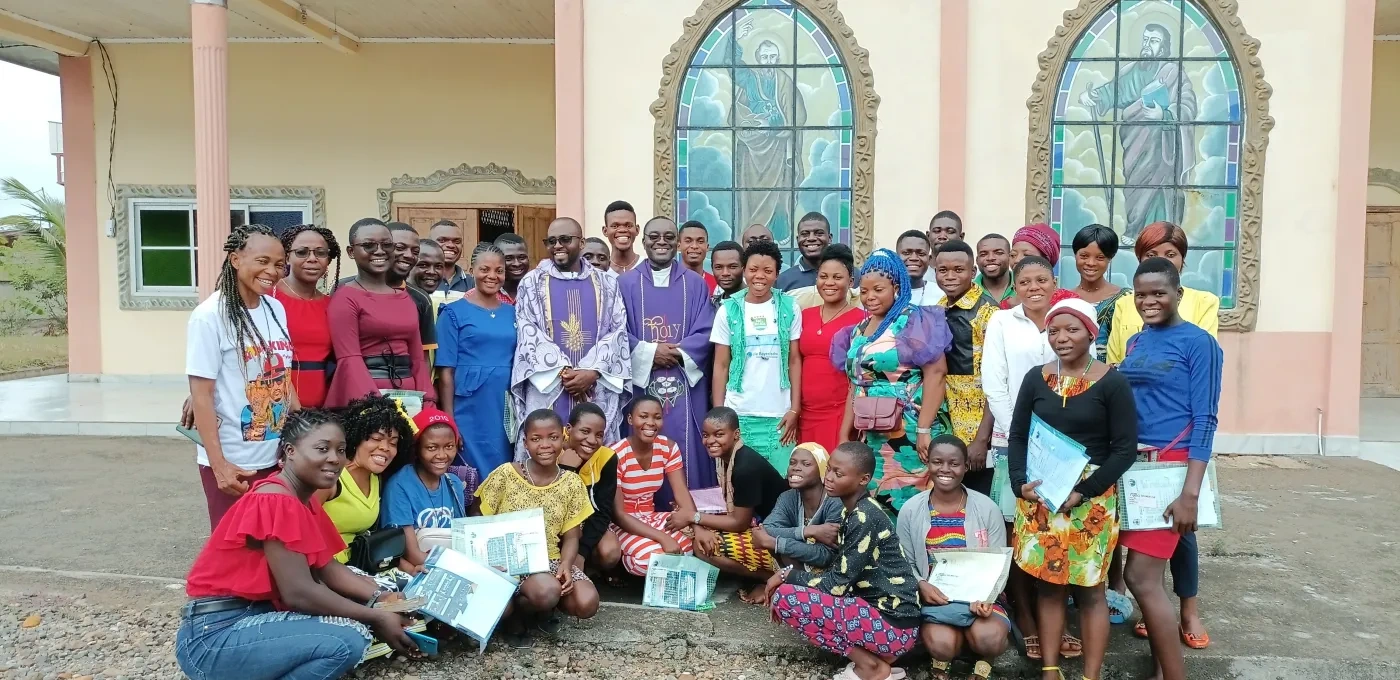
A CATHOLIC archbishop in Cameroon is preparing a unique catechism on peace aimed at rebuilding a generation scarred by a decade of violence – after thousands were killed and up to a million people displaced in the north-west.
Archbishop Andrew Nkea Fuanya of Bamenda said the project, inspired by Pope Leo XIV’s message of peace, will consist of 100 questions and answers designed to teach young people of all faiths the values of human dignity, reconciliation and respect for life.
With support from Catholic charity Aid to the Church in Need (ACN), the archbishop hopes to print and distribute the catechism widely among children and young people in north-west Cameroon, where conflict between separatist groups and government forces has raged since 2016.
He said: “During these ten years of suffering, our young people have grown up surrounded by violence.”
The crisis has left deep wounds across Cameroon’s English-speaking regions. According to figures cited by Archbishop Nkea, between 8,000 and 10,000 people have been killed, although he believes the true number could be higher, while between 800,000 and one million people have been forced to flee their homes.
The impact on children, who make up around 60 percent of the population, has been especially severe.
“The war has created a new generation deeply marked by conflict,” the archbishop said.
For around five years, many children were unable to attend school because of insecurity and attacks linked to the conflict. When some schools eventually reopened, many pupils had become too old to return to primary education.
The violence has also affected the Church, with priests, religious and bishops kidnapped during the unrest.
In one of the worst-hit areas of the archdiocese, abductions became so frequent that Archbishop Nkea took the dramatic decision to close parishes and withdraw clergy until their safety could be guaranteed.
What troubled him most, however, was that many of those involved were not strangers to the Church.
He said: “They were young people from the community itself. Many of their parents were Christians, and some of them also considered themselves Christians. They could attend Mass on Sunday and shortly afterwards kidnap a priest.”
Faced with the escalating violence, the archbishop rejected any suggestion of retaliation.
He stressed: “We are not going to fight anyone.”
The Church suspending its presence in some areas, prompted an unexpected response from local communities.
According to Archbishop Nkea, mothers began confronting their sons, warning them that the loss of churches, schools and hospitals would have serious consequences.
“They told them: ‘We cannot live without Mass.’ ‘If the bishop closes the Church hospitals, where will we go when we are sick?’”
Gradually, local residents became involved in efforts to secure the release of kidnapped clergy.
Determined not to lose the services provided by the Church, community leaders pressured armed groups and negotiated for the release of their captives.
For Archbishop Nkea, the experience highlighted the urgent need to address the damage done to a generation raised amid bloodshed and instability.
“They have witnessed killings. They have witnessed kidnappings. They have seen respect for human life and human dignity decline,” he said.
He believes the answer lies not only in ending violence but also in teaching a new way of thinking.
“We want to build a new culture. A culture based on respect for the human person, the value of life, reconciliation and peace.”
That conviction led to the creation of the peace catechism, inspired by a visit to Bamenda by Pope Leo XIV, who left what the archbishop described as “a very powerful message of peace” that shouldn’t be squandered.
Around 15,000 pupils attend Catholic schools across the archdiocese, including Christians, Muslims and followers of traditional religions. As a result, the text will focus not on Catholic doctrine but on universal values such as forgiveness, peaceful coexistence, respect for human dignity and the sanctity of life.
“It will be a text based on the Holy Father’s message of peace. This catechism will not be intended only for Catholics. We believe it is a concrete way of sowing peace among the younger generations,” Archbishop Nkea said.
With ACN’s support, he hopes the catechism can be distributed widely and introduced to children from an early age.
After ten years in which many young Cameroonians have known little except conflict, the Church in Bamenda hopes the initiative will help cultivate a different future rooted in reconciliation, respect and peace.
With thanks to Daniel Castilla