Holy Land risks becoming a ‘Disney Land’ devoid of Christians warns Abbot
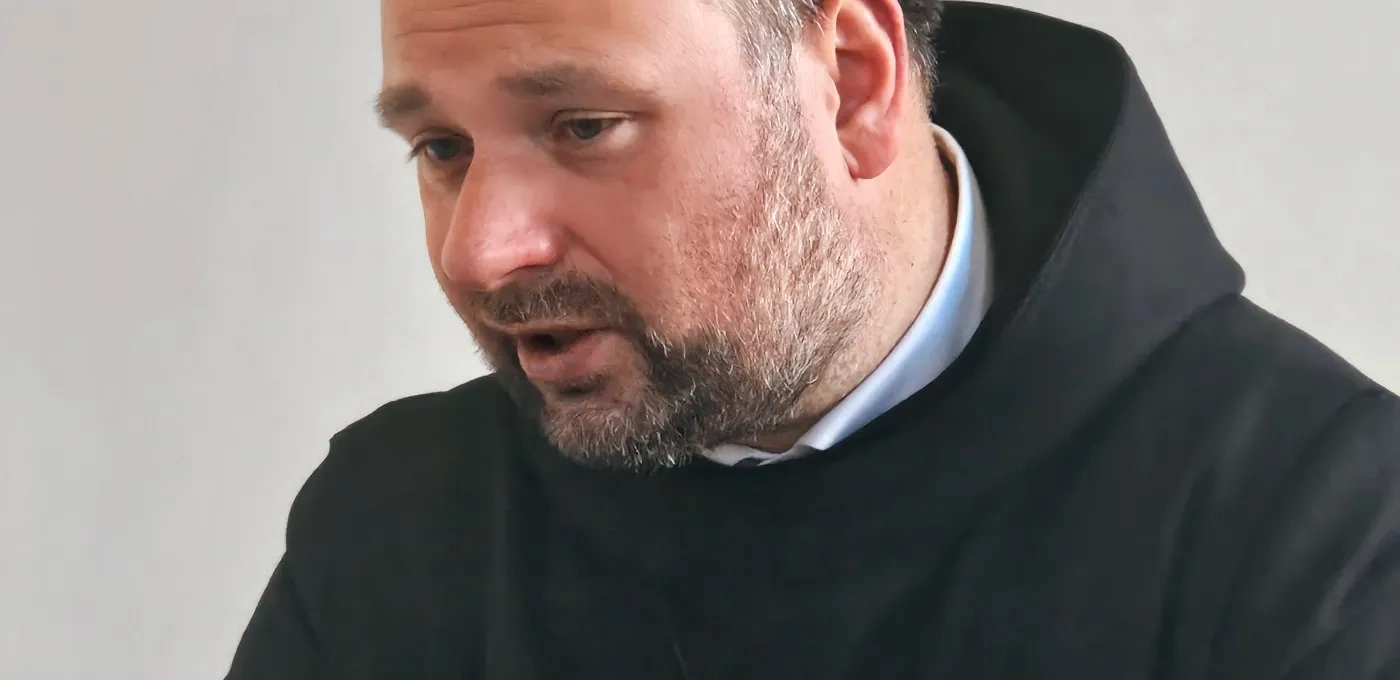
A Benedictine Abbot fears that with Christians declining in the Holy Land the historic quarters will become empty of families and Christian life.
Dom Nikodemus Schnabel offered a stark portrait of the situation of Christians in the region where only a “tiny” minority, remain due to war, economic hardship, uncertainty and a steady exodus.
Speaking with Catholic charity Aid to the Church in Need (ACN) he said areas in the Holy Land risked becoming empty symbols devoid of witnesses.
He said: “There is no Annunciation without Nazareth, no Christmas without Bethlehem, no Easter without Jerusalem.”
He added: “If you think this is an Eldorado of Christianity, the reality is different.
“All Christians together are less than 2 percent. For us, dreaming of reaching 5 percent or 6 percent would already be a lot.
“If you think of the most secularised regions in Europe – like the Czech Republic or the former East Germany – even there Christians are much more numerous than here”
Abbot Nikodemus said that Jerusalem’s Christian presence is marked by profound pluralism rather than a single, unified voice, with 13 historic Churches. The Holy Sepulchre, for example, is shared by six different Churches.
The Abbot said: “It is very, very colourful with many different Churches and traditions.”
But he added: “The paradox is clear – the place where the most important events of our Faith occurred risks losing its indigenous Christians.
“My fear is that the Holy Land could become a kind of ‘Christian Disneyland’. The holy places will remain, with monks and priests. But there might be no Christian families, no young Christians, no ordinary Christian life.”
Abbot Nikodemus said there were three main Christian groups – Arabic speaking Palestinian Catholics who have been present in the region for centuries, Hebrew-speaking Catholics, “a small but growing community”, and a third group of Catholics made up of refugees and asylum seekers, with estimated numbers nearing 100,000.
Abbot Nikodemus said this third group was, “in many ways, the most vulnerable,” describing situations he referred to as “a form of modern slavery”.
He denounced the “inhumane conditions” faced by many migrant Christian workers in Israel, who have their passports confiscated and have very limited freedom to change employers, suffer family separation, and live under a legal framework that, in practice, penalises motherhood among some foreign workers who do not wish to abort their pregnancies which can have difficult consequences.
He added: “In the eyes of the system, the most ‘criminal’ act can be to say yes to life.”
The abbot also denounced the growing hostility towards Christians from extremist Jewish groups, including incidents of “spitting in the streets, vandalism, arson attacks, desecration and hate graffiti”.
He pointed to ultra-nationalist religious groups and strongly criticised the presence in the Israeli government of figures who, he said, “have legitimised or enabled such attitudes”.
At the same time, he stressed that this does not reflect a general attitude among all Israeli Jews and said that there are also Jewish groups who actively defend Christian communities and denounce these abuses.
He added: “This phenomenon can no longer be considered marginal.”
With thanks to Maria Lozano